
Cheque Bounce in India: Legal Remedies, Penalties, and Step-by-Step Recovery Process
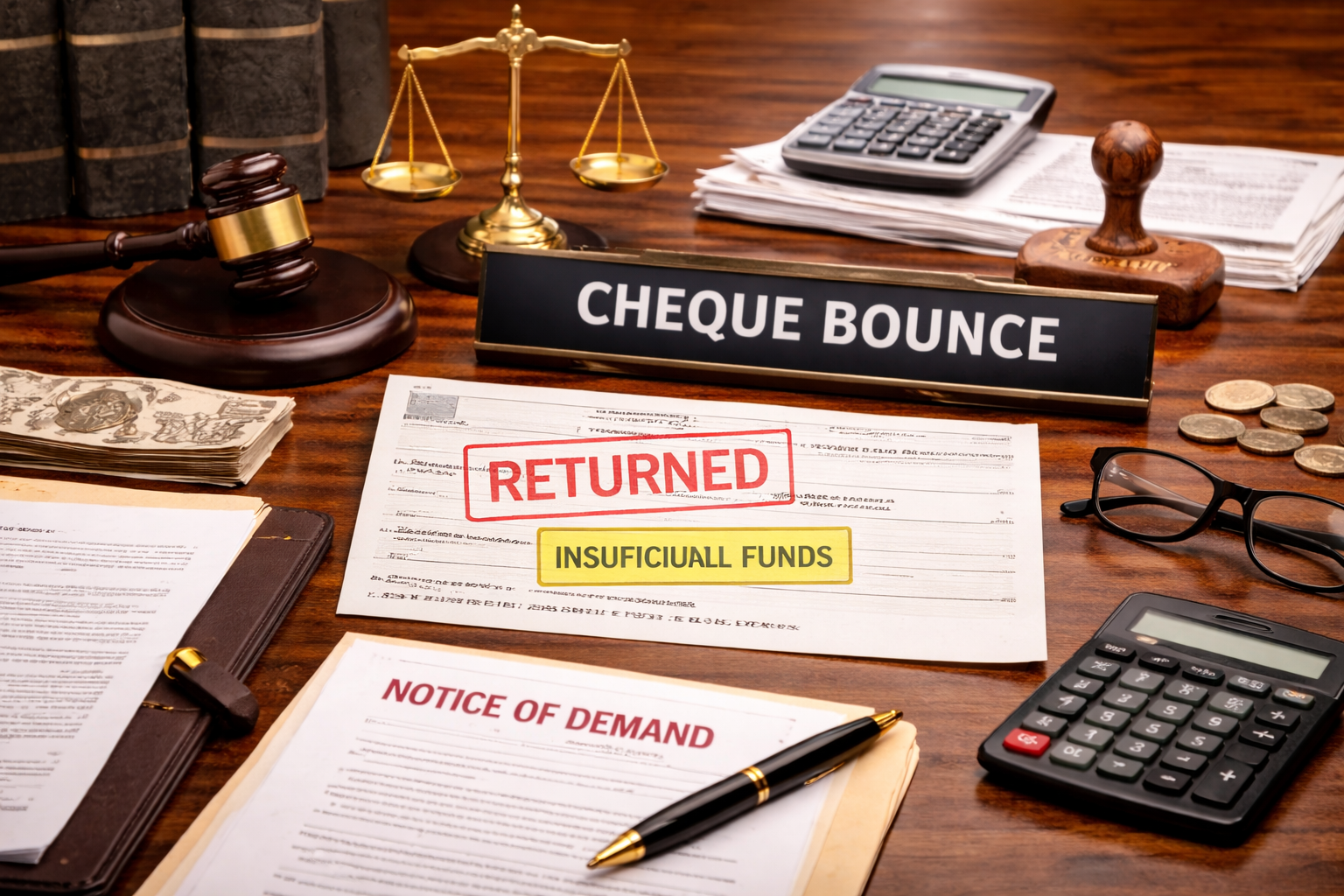
Cheque bounce cases are among the most common financial disputes in India. When a cheque issued for payment is returned unpaid by the bank, it not only causes financial inconvenience but can also lead to serious legal consequences. The law governing cheque dishonour in India primarily falls under the provisions of the Negotiable Instruments Act, 1881, specifically Section 138.
This article provides a complete legal guide to cheque bounce cases, including causes, legal remedies, penalties, and the process to recover money through legal action.
What is a Cheque Bounce?
A cheque bounce occurs when a bank refuses to honour a cheque presented for payment. This means the cheque cannot be processed and the amount mentioned on the cheque is not transferred to the payee’s account.
Under Indian law, cheque dishonour becomes a criminal offence if the cheque was issued for repayment of a legally enforceable debt or liability.
Cheque bounce cases are governed by Section 138 of the Negotiable Instruments Act, 1881, which provides strict penalties against the drawer (the person who issued the cheque).
Common Reasons for Cheque Bounce
A cheque can be dishonoured for several reasons, including:
- Insufficient funds in the account
- Signature mismatch
- Account closed
- Incorrect date on cheque
- Overwriting or alteration
- Stop payment instructions by the drawer
- Expired cheque (validity usually 3 months)
Among these, insufficient funds is the most common reason for cheque bounce in India.
Legal Framework for Cheque Bounce in India
Cheque bounce cases are primarily governed under:
- Negotiable Instruments Act, 1881
- Relevant procedures under the Code of Criminal Procedure, 1973
Section 138 of the Negotiable Instruments Act makes cheque dishonour due to insufficient funds a criminal offence, provided certain legal conditions are fulfilled.
Conditions Required to File a Cheque Bounce Case
For a cheque bounce case to be legally valid, the following conditions must be satisfied:
- The cheque must be issued for repayment of a legally enforceable debt.
- The cheque must be presented to the bank within its validity period.
- The cheque must be returned unpaid by the bank.
- The payee must send a legal notice to the drawer within 30 days of receiving the bank memo.
- The drawer must fail to make payment within 15 days of receiving the notice.
If these conditions are met, the payee has the right to file a criminal complaint before the appropriate court.
Step-by-Step Legal Process for Cheque Bounce Cases
1. Cheque Presentation
The payee deposits the cheque in their bank for payment.
2. Cheque Dishonour
If the cheque bounces, the bank issues a Cheque Return Memo explaining the reason.
3. Sending Legal Notice
The payee must send a legal notice to the drawer within 30 days demanding payment.
4. Waiting Period
The drawer gets 15 days to make the payment after receiving the notice.
5. Filing a Complaint
If payment is not made, the complainant can file a case under Section 138 before the Judicial Magistrate.
Punishment for Cheque Bounce in India
If the court finds the accused guilty under Section 138 of the Negotiable Instruments Act, 1881, the penalties may include:
- Imprisonment up to 2 years
- Fine up to twice the cheque amount
- Both imprisonment and fine
Courts may also order compensation to the complainant.
Jurisdiction for Filing Cheque Bounce Cases
The jurisdiction of cheque bounce cases is generally determined based on the bank where the cheque was deposited by the payee.
This principle was clarified in several judicial decisions, including the landmark judgment of the Dashrath Rupsingh Rathod v. State of Maharashtra, which significantly shaped cheque bounce litigation in India.
Documents Required for Filing a Cheque Bounce Case
To file a complaint, the following documents are typically required:
- Original cheque
- Cheque return memo from bank
- Copy of legal notice
- Proof of delivery of legal notice
- Copy of bank statement
- Affidavit and complaint petition
Proper documentation plays a crucial role in the success of cheque bounce litigation.
Civil Remedies Along with Criminal Case
Apart from filing a criminal complaint under Section 138, the payee can also pursue civil remedies to recover money. These include:
- Filing a civil recovery suit
- Arbitration if a contract contains an arbitration clause
- Summary suit under Order 37 of the Civil Procedure Code
Using both criminal and civil remedies often increases the chances of faster recovery.
Recent Trends in Cheque Bounce Litigation
Cheque bounce cases constitute a large portion of financial litigation in Indian courts. To reduce the burden on courts, the judiciary has encouraged:
- Mediation and settlement
- Online hearings
- Compounding of offences
The Supreme Court of India has also issued several directions to streamline cheque bounce proceedings and promote quicker dispute resolution.
Practical Tips to Avoid Cheque Bounce Disputes
Businesses and individuals can avoid cheque bounce issues by following these precautions:
- Maintain sufficient balance before issuing cheques
- Verify cheque details carefully
- Use digital payment methods for large transactions
- Maintain written agreements for financial dealings
- Track cheque clearance regularly
Proper financial discipline and documentation can significantly reduce legal risks.
Conclusion
Cheque bounce is not merely a banking issue; it is a serious legal offence in India that can lead to criminal prosecution and financial penalties. Understanding the legal framework under the Negotiable Instruments Act, 1881 helps individuals and businesses protect their financial interests and take timely legal action when necessary.
If you face a cheque bounce situation, consulting an experienced legal professional can help you navigate the process efficiently and ensure the recovery of your dues through proper legal channels.