
Dowry Death in India: Legal Provisions, Causes, Punishment & Prevention
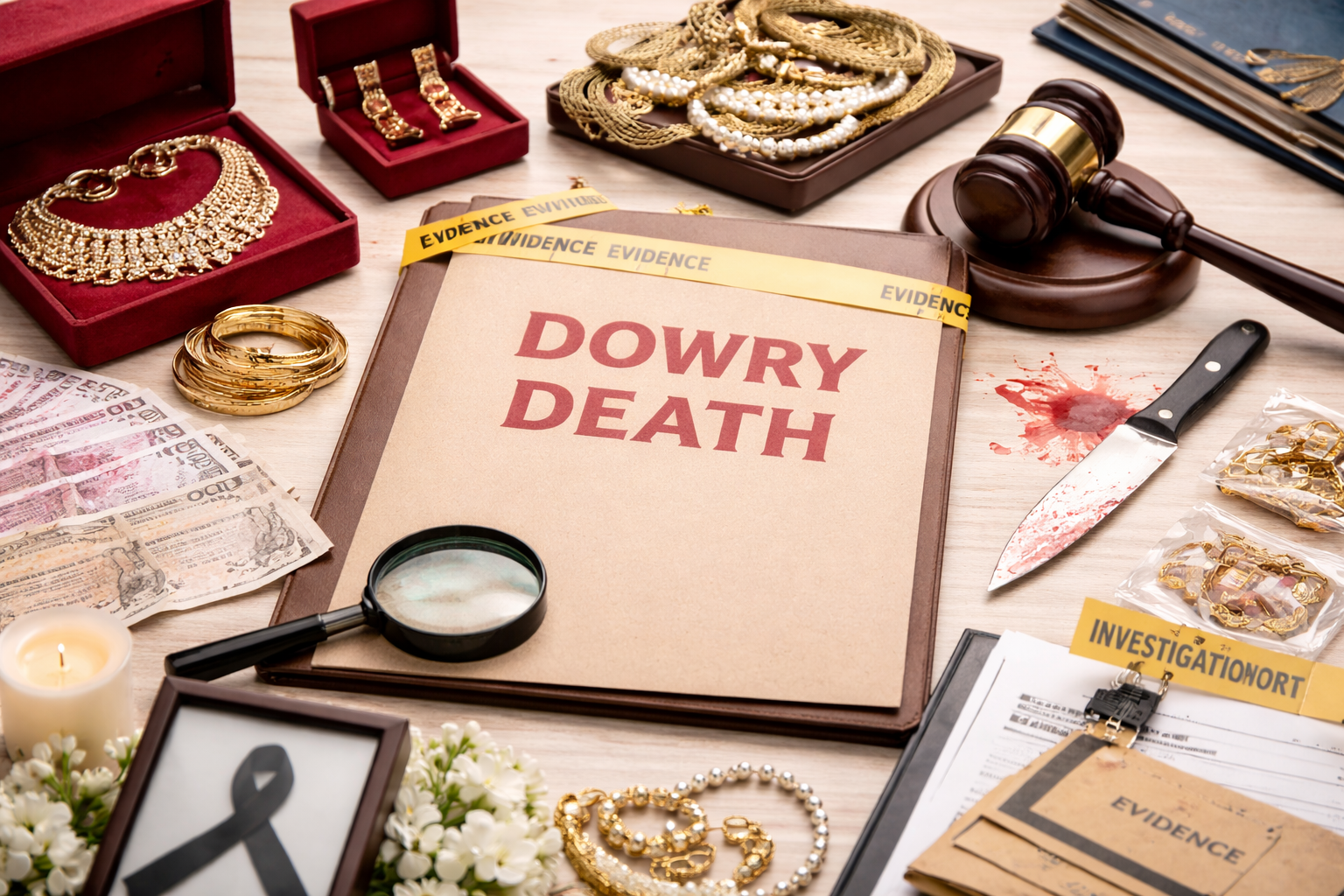
Dowry death is one of the most serious and disturbing social and legal issues in India. It refers to the death of a married woman caused by harassment, cruelty, or violence by her husband or his relatives in connection with dowry demands. Despite strict laws and increasing awareness, dowry-related crimes continue to affect thousands of families every year. Understanding the legal framework, causes, and remedies is essential to combat this social evil.
What is Dowry Death?
Dowry death is defined under Indian law as the death of a woman within seven years of her marriage under unnatural circumstances (such as burns, bodily injury, or suicide), where it is shown that she was subjected to cruelty or harassment related to dowry demands shortly before her death.
The term “dowry” refers to any property, valuable security, or gifts demanded or given in connection with marriage. While giving voluntary gifts is culturally accepted, demanding dowry is illegal.
Legal Framework Governing Dowry Death
Dowry death cases are primarily governed by the following laws:
- Section 304B of the Indian Penal Code (IPC)
This section specifically deals with dowry death. It prescribes punishment when a woman’s death is linked to dowry harassment within seven years of marriage. - Section 498A IPC
Addresses cruelty by husband or relatives, including physical and mental harassment for dowry. - Dowry Prohibition Act, 1961
Prohibits giving, taking, or demanding dowry. - Indian Evidence Act, Section 113B
Presumes that the husband or relatives caused the dowry death if cruelty for dowry is proven before death.
Essential Ingredients of Dowry Death
To establish a dowry death case, the prosecution must prove:
- The death of a woman was caused by burns, bodily injury, or occurred under unnatural circumstances.
- The death occurred within seven years of marriage.
- The woman was subjected to cruelty or harassment.
- Such cruelty or harassment was related to dowry demands.
- The harassment occurred shortly before her death.
If these conditions are met, the court presumes it to be a dowry death.
Punishment for Dowry Death
The punishment under Section 304B IPC is:
- Minimum imprisonment of 7 years, which may extend to life imprisonment
In addition, offenders may also be punished under Section 498A IPC and the Dowry Prohibition Act, leading to stricter penalties.
Causes of Dowry Death
Dowry deaths are rooted in deep social and cultural issues, including:
- Greed and Financial Pressure
Families demand money, property, or expensive gifts beyond their means. - Patriarchal Mindset
Women are often seen as financial burdens, leading to exploitation. - Social Pressure and Status
Dowry is sometimes linked to prestige and social standing. - Lack of Awareness
Many families are unaware of legal protections or hesitate to take action. - Fear and Silence
Victims often suffer in silence due to fear of stigma or retaliation.
Signs of Dowry Harassment
Recognizing early warning signs can help prevent tragedies:
- Constant demands for money or gifts
- Physical or emotional abuse
- Threats from in-laws or husband
- Isolation from family and friends
- Pressure to bring additional dowry
Early intervention can save lives.
Legal Remedies for Victims
Women facing dowry harassment have several legal options:
- File FIR
A complaint can be lodged under Section 498A IPC for cruelty. - Seek Protection
Protection orders can be obtained under domestic violence laws. - Approach Women’s Cells
Police and NGOs provide counseling and assistance. - Helplines and Support Centers
Government helplines and One Stop Centers offer immediate help. - Legal Aid
Free legal services are available for victims.
Investigation Process
In cases of dowry death:
- Police conduct an inquest and investigate the cause of death
- A magistrate inquiry is often mandatory
- Post-mortem examination is conducted
- Statements from family members and witnesses are recorded
- Evidence of harassment is collected
These steps ensure a fair and thorough investigation.
Role of Judiciary
Indian courts take dowry death cases very seriously. The judiciary has:
- Strengthened interpretation of laws
- Ensured strict punishment for offenders
- Emphasized protection of women’s rights
Courts also rely on presumptions under the Evidence Act to ensure justice.
Prevention of Dowry Death
Preventing dowry deaths requires collective effort:
- Awareness Campaigns
Educate people about the illegality of dowry. - Strict Law Enforcement
Ensure quick action against offenders. - Empowering Women
Education and financial independence reduce vulnerability. - Changing Social Mindset
Promote equality and respect for women. - Encouraging Reporting
Victims should feel safe to report harassment.
Government Initiatives
The government has taken several steps:
- Women helplines (e.g., 181)
- One Stop Centers for support
- Fast-track courts for speedy trials
- Awareness programs against dowry
These initiatives aim to reduce crimes and support victims.
Challenges in Dowry Death Cases
Despite strict laws, challenges remain:
- Delay in justice delivery
- Difficulty in collecting evidence
- Social stigma and pressure
- Misuse of laws in some cases
Balancing justice and fairness is essential.
Importance of Legal Awareness
Understanding dowry laws helps individuals:
- Protect themselves and their loved ones
- Take timely legal action
- Prevent exploitation
- Promote a dowry-free society
Legal literacy is a powerful tool against such crimes.
Conclusion
Dowry death is not just a legal issue but a serious social problem that reflects deep-rooted inequality and injustice. While laws in India are stringent, their effectiveness depends on awareness, enforcement, and societal change. Eliminating dowry practices, supporting victims, and promoting gender equality are crucial steps toward ending this menace.
Every individual has a role to play in creating a society where marriages are based on mutual respect and love, not financial transactions. Only then can we truly eradicate dowry deaths and ensure justice for victims.